%20(2)%20(1).png)


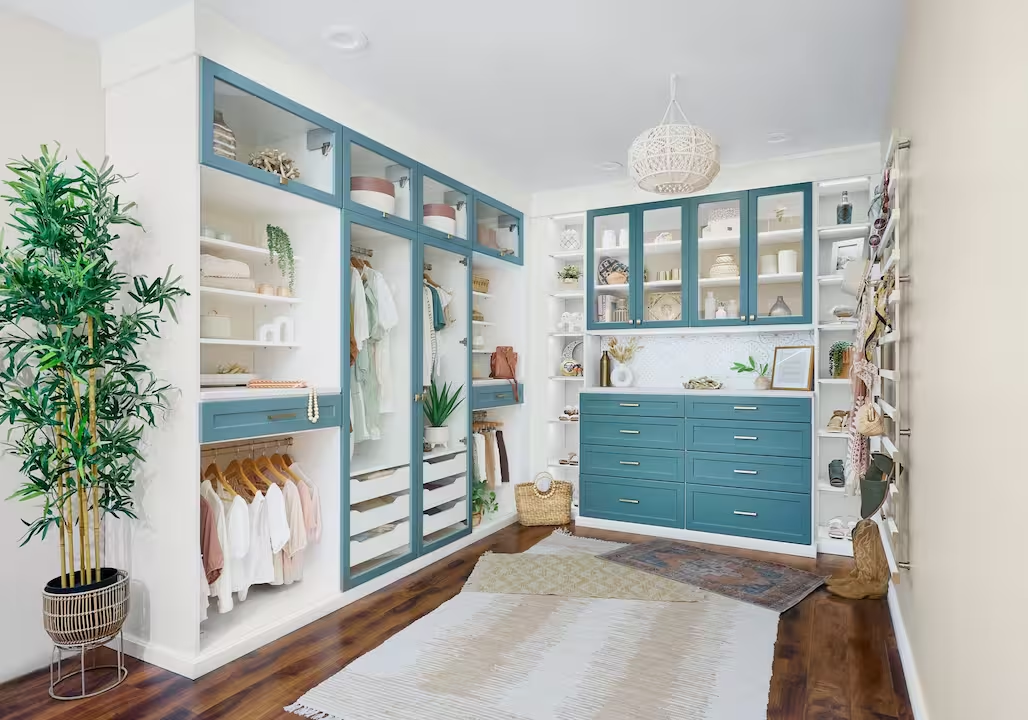
A boutique-style walk-in closet applies the visual merchandising principles used in high-end retail (open display, ambient lighting, and intentional organization) to a residential closet space. The result is a room where clothing, shoes, and accessories are displayed as part of the design rather than stored away in it. Complete Closet Design creates custom walk-in closets for homeowners throughout the Chicago suburbs, including designs where the finish quality and display logic rival what you'd find in a luxury boutique.
You walk in, and for a moment it takes you a second to register that it's a closet. The lighting is warm and even. The shoes are displayed on angled open shelving at eye level. The handbags sit on individual acrylic risers on a center island, visible from every angle. The clothing is arranged by color and type in sections that make getting dressed feel like a deliberate act rather than a rummage.
That's the experience a boutique-style closet delivers, and it's available to homeowners in Wheaton or Oak Brook, not just in a downtown shopping district.
5 Design Features That Give a Closet That Boutique Feel
The details below are what separate a closet that stores clothes from one that displays them, each one borrowed directly from retail design and adapted for residential use.
1. Open Display Shelving for Shoes and Accessories
Luxury retail never hides its best merchandise. A boutique-style closet applies that same logic: shoes displayed on angled open shelving at eye level, handbags on individual hooks or risers, jewelry in glass-front drawers or open trays. The key is that display items are lit and visible, not stacked in boxes on a high shelf.
Angled shoe shelving (typically set at 20 to 25 degrees) shows the shoe profile, keeps pairs separated, and makes the selection feel curated. The same footwear that looks like clutter in a flat pile looks like a collection on proper display shelving. For more on achieving this look, our guide to luxury closet ideas covers additional design elements worth considering. This is one of the details that most noticeably elevates a closet from functional to boutique.
2. Integrated Ambient Lighting
Retail boutiques spend considerable money on lighting because it changes how products look and how shoppers feel in the space. Integrated LED strip lighting inside hanging sections, under shelves, and inside glass-front cabinets does the same thing in a residential closet. It reveals fabric colors accurately, eliminates shadows in deep sections, and creates a warmth that overhead lighting alone can't achieve.
For Chicago area homes where natural light in master closets is limited or absent, this lighting isn't decorative. Being able to accurately see the color difference between two navy pieces or confirm that a blazer matches pants requires even, warm light at the right angle. Our guide to walk-in closet lighting ideas covers more options for getting this right.
LED temperature in the 2,700 to 3,000K range produces warm, even light that renders fabric colors accurately and shows them closer to how they'll appear in natural light.
3. A Center Island With Drawers and Display Surface
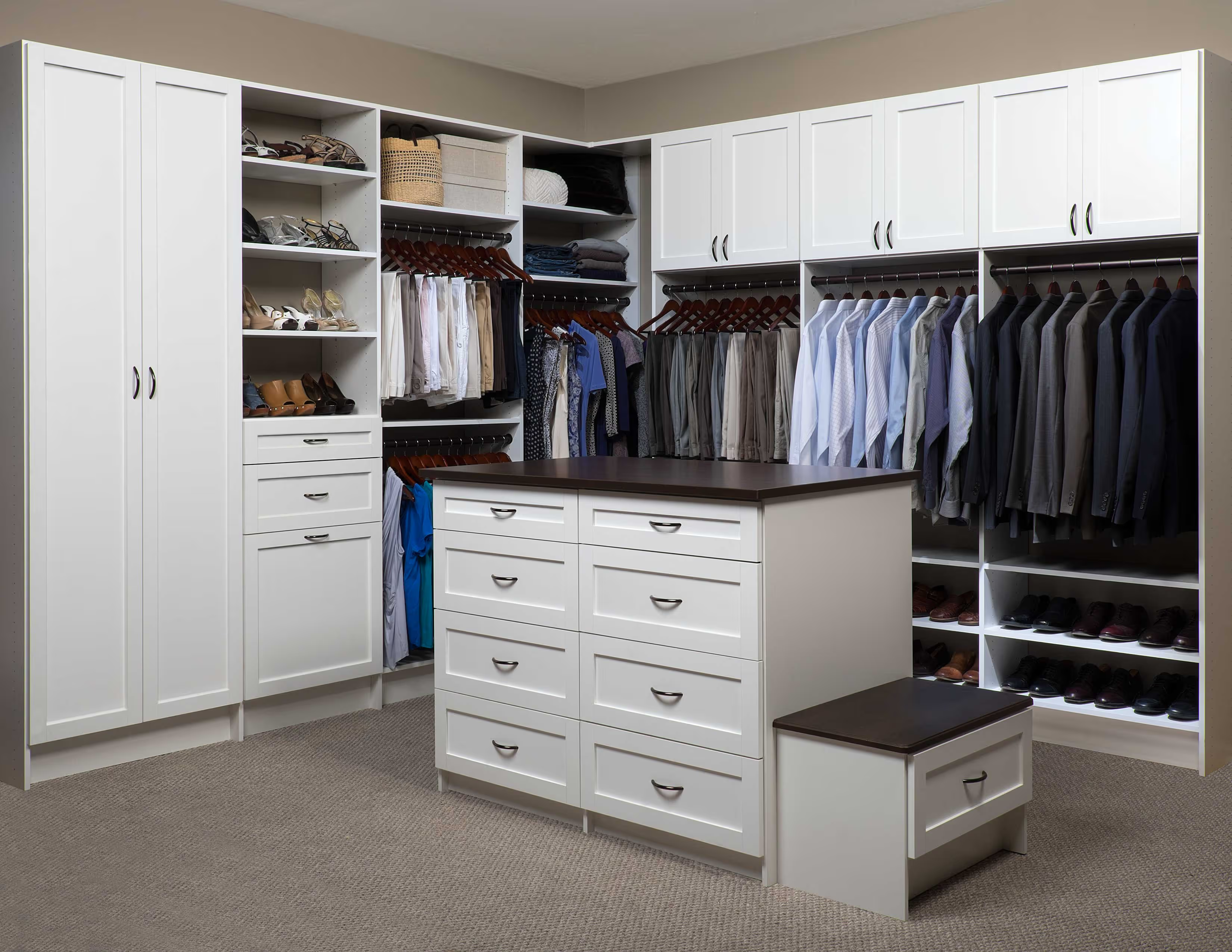
The center island is often what separates a boutique-style closet from a standard one. A well-designed island provides a flat surface for laying out outfits and staging accessories, with drawers below for folded items, jewelry, or accessories that need protected storage.
Islands work in closets of approximately 10 by 12 feet or larger, roughly the size of a small bedroom. Smaller closets can achieve a similar effect with a narrower console-style peninsula along one wall. The surface material matters. A stone top, a lacquered finish, or a contrasting wood species communicates the luxury that the rest of the closet's cabinetry sets up.
4. Glass-Front Display Cabinets for Handbags and Special Items
Glass-front cabinetry adapted from retail display cases protects and displays handbags, luxury accessories, and special pieces in a way that closed cabinet doors can't. The items remain visible, protected from dust, and individually accessible.
This feature works best as an accent within a larger cabinetry system rather than across every unit. Two or three glass-front sections among otherwise solid cabinet doors create visual variety and draw the eye to the items being displayed. A custom walk-in closet design integrates these elements into a cohesive plan where the glass and solid sections feel intentional rather than mixed.
5. Color-Zoned Clothing Organization
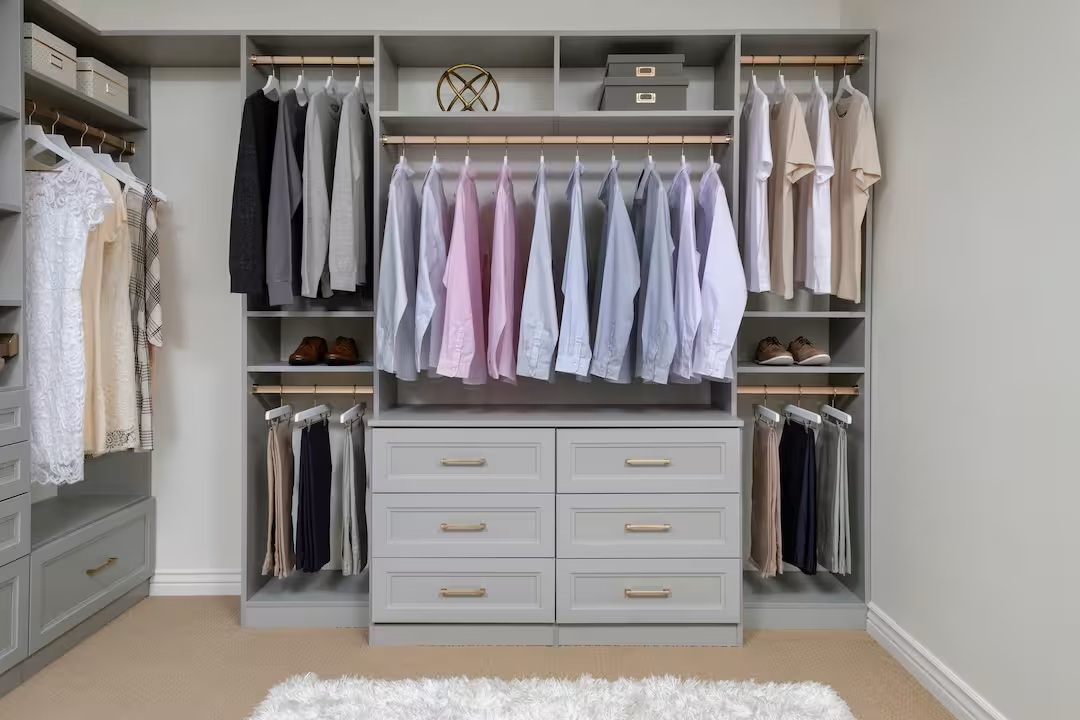
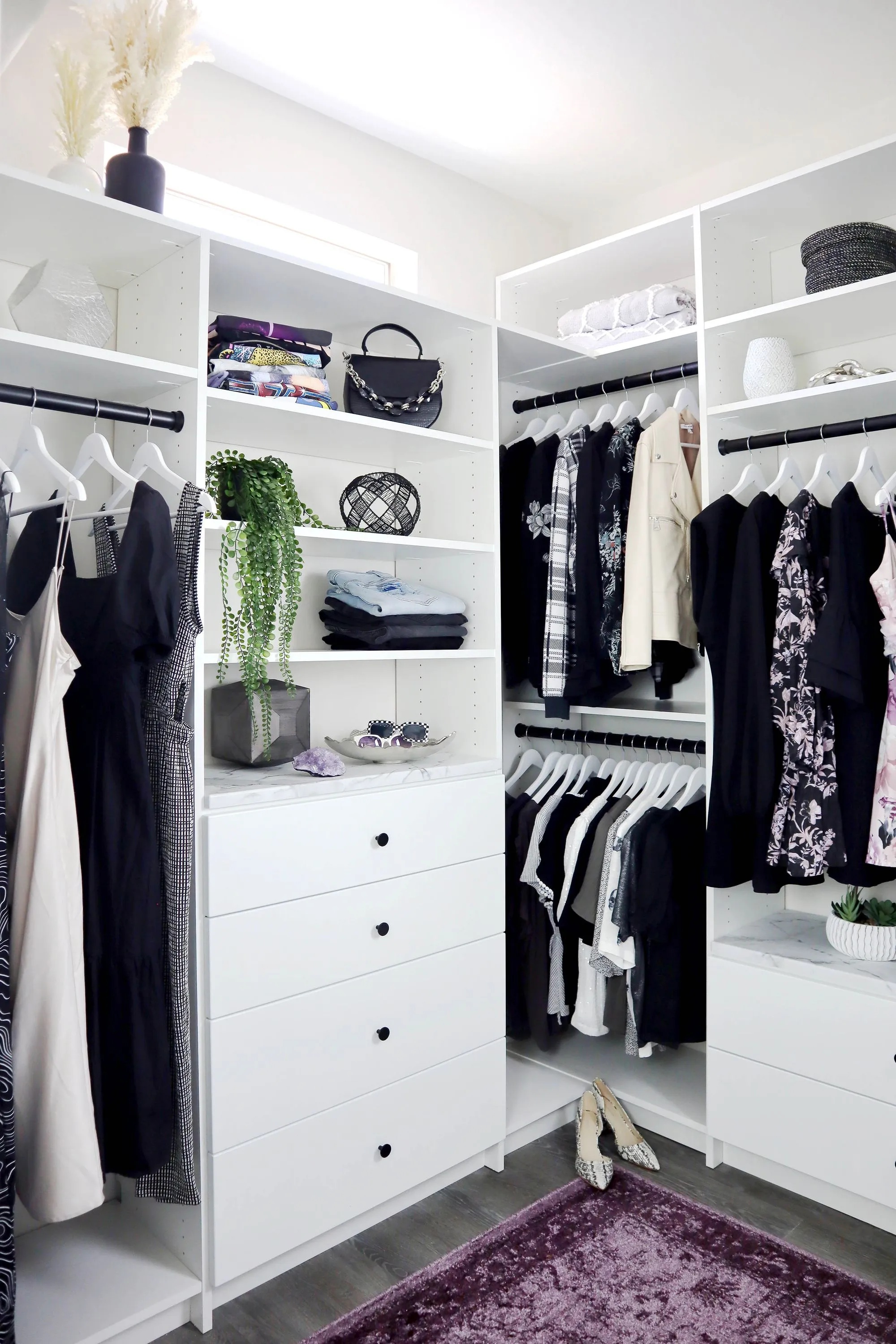
Boutiques organize by color story, not just by category. Applying the same logic to a residential closet (sorting clothing into color-graduated sections within each category) makes the visual experience feel significantly more intentional and makes getting dressed faster. The closet reads as a curated collection rather than a storage rack.
Matching hangers in wood or velvet at consistent spacing maintain the visual rhythm that turns a functional closet into a display space. The combination of color organization, uniform hangers, and proper lighting is where most boutique-closet conversions have the highest visible impact.
Frequently Asked Questions
How large does a closet need to be for boutique-style design?
A boutique-style closet is achievable in spaces as small as 8 by 10 feet, though the full center island configuration typically requires 10 by 12 feet or more. Smaller spaces achieve the boutique feel through lighting quality, open display shelving, and glass-front accents rather than an island. Complete Closet Design designs for the actual space, not an idealized floor plan.
What materials are most common in luxury walk-in closet designs?
Premium walk-in closets in Chicagoland typically use European-style frameless cabinetry in matte or high-gloss finishes, with stone or solid surface island tops, integrated LED lighting, and hardware in brushed gold, matte black, or brushed nickel. Velvet drawer inserts and glass display panels complete the luxury aesthetic. Material selection is driven by the homeowner's style and the home's existing aesthetic.
Does Complete Closet Design serve homeowners in Oak Brook and Wheaton?
Yes. Complete Closet Design designs and installs custom walk-in closets in Wheaton and throughout the western suburbs, including Oak Brook, Downers Grove, and Elmhurst. Every project includes a complimentary design consultation and 3D visualization so you see exactly what the finished closet will look like before installation begins.
Experience Your Closet as a Room Worth Being In
Most closets are designed to fit clothes. A boutique-style closet is designed around the person wearing them. Open display, precise lighting, a center island, glass-front cabinetry, and color-zoned organization each add a specific layer from the retail-quality experience. Together, they turn a room that most homeowners never show anyone into one of the most satisfying spaces in the house.
Complete Closet Design offers a complimentary design consultation and 3D visualization for homeowners across the Chicago suburbs. Schedule your free consultation to see what your walk-in closet could become.
Design Your Dream Workbench - Affordable Payment Plans Available!
Don’t let budget concerns hold you back. Design the custom workbench you deserve with our affordable payment plans. Start your project today!